
Teaching children Scripture is important, but they also need to understand the love of Christ, His sacrifice, and what it means to live in fellowship with God.
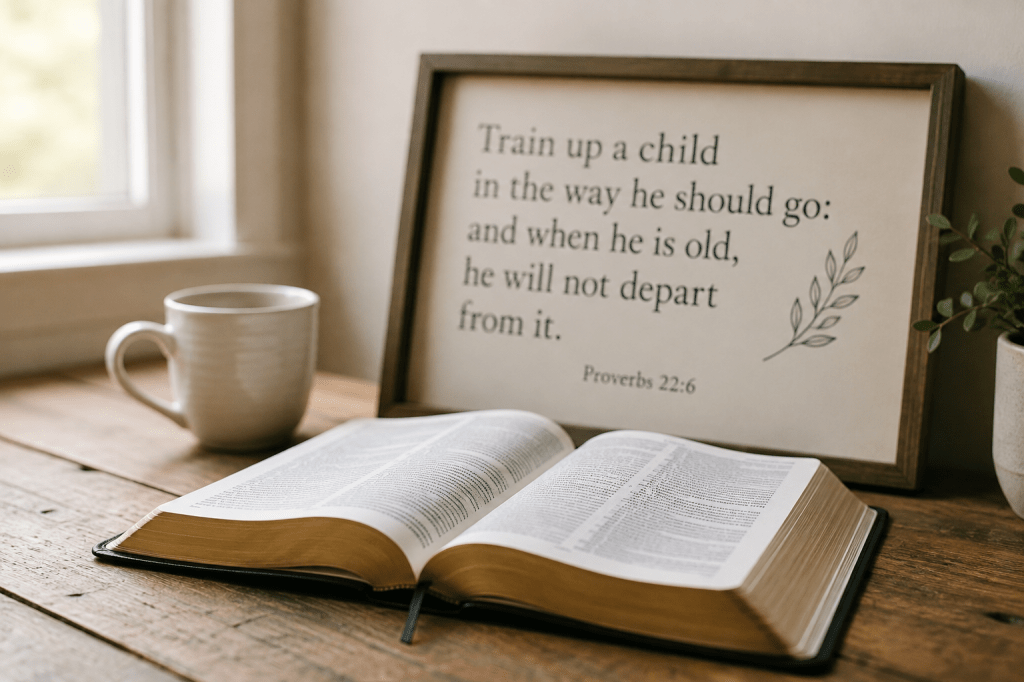
There is something beautiful about teaching a child the Bible.
We teach them that “In the beginning God created the heaven and the earth.” We tell them about Noah and the ark, Abraham and the promise, Moses and the children of Israel, David and Goliath, Daniel in the lions’ den, Esther, Ruth, Joseph, and all the other people and events that make up the story of Scripture.
We teach them the stories because they matter.
They give our children a foundation. They introduce them to the history of God’s dealings with humanity. They teach them about obedience and disobedience, faith and fear, courage and failure, judgment and mercy. They allow our children to see that the people God used were not perfect people, but people who lived within the reality of a holy and sovereign God.
And Scripture actually tells us to make these things known to the generations that come after us.
“We will not hide them from their children, shewing to the generation to come the praises of the LORD, and his strength, and his wonderful works that he hath done.”
Psalm 78:4, KJV
But as I have thought about what it means to teach children about God, I have started wondering whether there is another layer we sometimes miss.
It is one thing to teach our children Bible stories. It is another thing to help them understand the God those stories reveal.
And perhaps even more importantly, we have to help them understand the gospel.
The Stories Matter, But the Story Does Not End There
There is nothing wrong with teaching a child that David defeated Goliath.
But what happens when we teach the story and never get to the God behind David’s confidence?
David’s victory was not simply a lesson about fighting giants. It revealed something about David’s confidence in the living God.
David said:
“Thou comest to me with a sword, and with a spear, and with a shield: but I come to thee in the name of the LORD of hosts, the God of the armies of Israel, whom thou hast defied.”
1 Samuel 17:45, KJV
There is something for a child to learn there.
The lesson is not merely, “You can defeat your giants.”
The deeper lesson is, “There is a God who is greater than what you are facing, and your confidence does not have to rest in your own strength.”
That distinction matters.
We can turn Bible stories into motivational lessons if we are not careful. We can make David about courage, Daniel about bravery, Noah about obedience, and Joseph about perseverance without ever bringing our children into a deeper understanding of God.
The Bible is not ultimately a collection of inspirational stories about impressive people.
It is the revelation of God and His redemptive work.
And that means our children deserve more than the stories.
They deserve the gospel.
What Does the Gospel Mean to a Child?
Sometimes we grow up hearing about Jesus so often that the familiarity of His name can cause us to overlook the magnitude of what He actually did.
Jesus came.
Jesus lived.
Jesus suffered.
Jesus died.
Jesus rose again.
But why?
Because God loved us.
John 3:16 is probably one of the first Scriptures many children learn:
“For God so loved the world, that he gave his only begotten Son, that whosoever believeth in him should not perish, but have everlasting life.”
That is not merely a verse to memorize.
That is the gospel.
God’s love was demonstrated through His giving.
And Scripture takes that love even further:
“But God commendeth his love toward us, in that, while we were yet sinners, Christ died for us.”
Romans 5:8, KJV
I think our children need time to sit with that truth.
They need to understand that Christ did not simply become a character in a Bible story. He came into the world for sinners. He willingly laid down His life. He bore the consequences of sin. He died and rose again.
And when we tell them that Jesus loves them, we should help them understand what that love actually looks like.
It is not merely sentimental.
It is sacrificial.
It is holy.
It is demonstrated.
“Hereby perceive we the love of God, because he laid down his life for us.”
1 John 3:16, KJV
Teaching Them That God Is Near
I think this is where Christian teaching can become deeply personal.
Growing up, many of us heard about God.
We heard about Jesus.
We learned Scriptures.
We went to church.
We learned the stories.
But knowing about God and understanding what it means to walk with God are not necessarily the same thing.
A child needs to know that God is not merely a character in the Bible.
He needs to understand that the God revealed in Scripture is the God we are called to know, love, trust, obey, and worship.
Jesus said:
“If ye love me, keep my commandments.”
John 14:15, KJV
There is relationship in that.
There is also responsibility.
The Christian life is not simply knowing facts about Jesus. It is learning to follow Him.
And this is something we can begin teaching our children while they are young.
We can teach them how to pray when they are afraid.
We can teach them to thank God when something good happens.
We can teach them to confess when they have done wrong.
We can teach them that forgiveness matters.
We can teach them to seek God’s wisdom when they do not know what to do.
We can teach them to open Scripture when they have questions.
We can teach them that church and Christian fellowship are not merely things we attend because it is Sunday.
We can teach them that God is worthy of their whole lives.
That is different from simply teaching them Bible facts.
Teaching Them Who They Can Run To
This may be one of the greatest gifts we can give our children.
Life will eventually become difficult.
There will be disappointment.
There will be rejection.
There will be confusion.
There will be grief.
There will be moments when they do not understand why something happened or what they are supposed to do next.
And when those moments come, I want my children to know exactly where to run.
I do not want their first instinct to be that they have to figure everything out alone.
I want them to know how to pray.
I want them to know how to seek God.
I want them to know that Scripture is not merely something they learned in childhood. It is something they can return to when life becomes difficult.
I want them to know that Christ is not merely the answer we give children because we are raising them in church.
He is the One we actually trust.
The psalmist wrote:
“What time I am afraid, I will trust in thee.”
Psalm 56:3, KJV
That is something a child can understand.
When I am afraid, I can trust God.
As they grow, that simple truth can become much deeper.
When I am confused, I can seek God.
When I have sinned, I can repent.
When I am hurting, I can pray.
When I do not understand what God is doing, I can still trust Him.
When I feel alone, I can remember that God has not abandoned me.
That is discipleship.
We Have to Teach Them the Love of Christ
There is a difference between telling a child, “Jesus loves you,” and helping them understand what that statement means.
The love of Christ is not simply that Jesus wants us to have a comfortable life.
The love of Christ is not a promise that nothing painful will ever happen.
The cross itself reminds us of that.
Christ’s love took Him through suffering.
It took Him through rejection.
It took Him to Calvary.
And yet He willingly gave Himself.
Jesus said:
“Greater love hath no man than this, that a man lay down his life for his friends.”
John 15:13, KJV
When we teach our children about the cross, we should not rush past what happened.
We can teach them that sin separates us from God.
We can teach them that humanity needs redemption.
We can teach them that Jesus Christ came willingly.
We can teach them that He died for sinners.
We can teach them that He rose again.
And we can teach them that because of Christ, reconciliation with God is possible.
The cross is not simply the sad ending to the story of Jesus.
The cross is central to the gospel.
Teaching Them More Than Rules
There is another danger we should consider.
If we teach children only what they are supposed to do, but never teach them why they should love God, Christianity can begin to feel like a list of rules.
Pray.
Read your Bible.
Go to church.
Be good.
Do not lie.
Do not steal.
Do not disobey.
Those things matter, but Christianity is not simply behavioral management.
Jesus did not come merely to produce better behaved children.
He came to reconcile sinners to God.
And as children grow, they need to understand that obedience flows from a relationship with God.
Jesus said:
“If ye love me, keep my commandments.”
John 14:15, KJV
Notice the order.
Love and obedience belong together.
We should teach our children what God commands, but we should also teach them why God is worthy of their obedience.
We should teach them His character.
His holiness.
His mercy.
His faithfulness.
His justice.
His patience.
His goodness.
His love.
When they understand who God is, obedience becomes more than simply “because Mommy said so.”
It becomes an opportunity to respond to the God they are learning to know.
Teach Them the History, But Give Them the Understanding
I do not think we need to choose between Bible stories and the gospel.
We need both.
Teach them Genesis.
Teach them Exodus.
Teach them the story of Israel.
Teach them about David.
Teach them about the prophets.
Teach them about the failures and victories of God’s people.
Teach them the history.
But do not leave them there.
Show them what those Scriptures reveal about God.
And then show them how the story ultimately leads us to Christ.
Jesus Himself taught His disciples to understand Scripture in light of Him.
After His resurrection, He said:
“These are the words which I spake unto you, while I was yet with you, that all things must be fulfilled, which were written in the law of Moses, and in the prophets, and in the psalms, concerning me.”
Luke 24:44, KJV
The Scriptures were not merely a collection of disconnected stories.
They were pointing toward God’s redemptive purposes.
And Christ is central to that story.
What Are We Giving the Next Generation?
This makes me think about what we are actually handing to our children.
Are we handing them Bible knowledge?
Or are we helping them develop a relationship of faith and obedience toward God?
Are we teaching them how to recite Scripture?
Or are we teaching them how to seek God when they need Him?
Are we telling them that Jesus died?
Or are we helping them understand why His death matters?
Are we teaching them that God exists?
Or are we showing them what it means to live as people who believe that He is present, faithful, holy, and worthy of our lives?
Deuteronomy gives parents a beautiful picture of intentional spiritual instruction:
“And these words, which I command thee this day, shall be in thine heart: And thou shalt teach them diligently unto thy children…”
Deuteronomy 6:6–7, KJV
Notice something important.
The command begins with “shall be in thine heart.”
Before we teach our children, God’s Word must be taking root in us.
Our children are not only listening to what we say.
They are watching how we live.
They are watching how we respond when we are angry.
They are watching whether we pray when we are afraid.
They are watching whether we repent when we are wrong.
They are watching whether we forgive.
They are watching whether church is merely an activity or whether Christ actually has a place in our lives.
That makes discipleship deeply personal.
I Want Them to Know Where to Run
Perhaps this is what I am really trying to say.
I want our children to know the stories.
But I want them to know the Savior.
I want them to know about Noah, but I also want them to know the God Noah trusted.
I want them to know about David, but I want them to understand what it means to trust God when they are facing something bigger than themselves.
I want them to know about Moses, but I want them to understand that God is faithful to His promises.
I want them to know about the prophets, but I want them to understand that God speaks, God judges, God warns, and God calls people to repentance.
And above all, I want them to know Jesus.
I want them to understand His sacrifice.
I want them to understand His resurrection.
I want them to understand repentance.
I want them to understand faith.
I want them to understand obedience.
I want them to understand that Christianity is not merely something their parents handed down to them.
It is a call to know God for themselves.
Because one day, they will leave our homes.
One day, we will not be standing beside them to remind them to pray.
One day, we will not be there to answer every question.
One day, they will face decisions we cannot make for them.
And when that day comes, I pray they will remember more than Bible stories.
I pray they remember the God those stories taught them to trust.
A Final Thought for Parents
We do not have to be perfect parents to teach our children about Christ.
We do not need to have every theological question answered.
We do not need to pretend that we never struggle.
In fact, there may be something powerful about allowing our children to see us seek God when we do not have the answers.
Let them see you pray.
Let them see you open your Bible.
Let them see you repent.
Let them see you worship.
Let them see you return to Christ when you have wandered.
Let them hear you say, “I don’t know, but let’s see what the Word of God says.”
Let them see that faith is not simply something we talk about when life is easy.
It is where we turn when life becomes hard.
Because the greatest thing we can give our children is not merely knowledge about God.
It is the opportunity to see what it looks like when someone genuinely trusts, loves, follows, and depends upon Him.
And when the storms of life eventually come, I want them to know exactly who to run to.
Jesus.
Reflection
Take a moment to consider:
What am I teaching my children about God through the way I live?
Am I giving them Bible stories without helping them understand the gospel behind those stories?
Do my children know that they can come to God when they are afraid, confused, hurting, or uncertain?
What would it look like for me to make Christ more visible in our home?
Closing Thought
“We cannot give our children the history of Scripture without also teaching them the love of the Christ those Scriptures reveal.”
The stories matter.
The history matters.
The doctrine matters.
But ultimately, we are introducing the next generation to God.
May we teach them the Word.
May we show them the gospel.
May we model repentance.
May we demonstrate love.
And may we raise children who do not merely know the stories of Jesus, but grow to know Jesus Christ.
Conversations to Clarity Footer CTA
Continue the Conversation
If this reflection made you pause, don’t let the conversation end here.
Conversations to Clarity is a space for honest questions, biblical reflection, personal growth, and the conversations that help us move from simply hearing something to actually understanding it.
Read. Reflect. Question. Grow.
Continue the conversation on Conversations to Clarity.

